Power-Cut Ready: Why planning for battery mode matters
Being power-cut ready helps UK homeowners and renters keep kitchens safe, protect food and preserve smart devices. This guide explains battery mode — internal fallback batteries, removable cells and external portable power stations — the risks of improper use and the benefits of planning. Recommended feature image: 1200 x 800 px; alt text: “Smart kitchen gadget running on portable power station during a power cut in a UK kitchen”.
The article covers how battery mode works (types, ratings, limits); which gadgets are safe; preparing devices (firmware); battery solutions; energy budgeting during outages; post‑outage checks. to use smart kitchen gadgets during power cuts UK; smart kitchen gadgets battery mode UK; battery-powered kitchen device safety UK.
Must-Have
Amazon.co.uk
Heavy-Duty Multifunctional Kitchen Scissors with Cover
How battery mode works: types, ratings and limitations
Battery types you’ll meet
Smart kitchen gadgets use three battery approaches:
Built-in backup batteries: tiny cells that keep clocks, timers or memory alive for minutes to hours.
Removable rechargeable packs: used in some hand mixers, scales or cordless food processors.
External solutions: USB power banks, UPS units and portable power stations that supply 5V USB or 230V AC via an inverter.
External options vary a lot in capability and cost — from pocket power banks to heavy-duty portable power stations suited to multiple devices.
Editor's Choice
Jackery Explorer 240 v2 Portable Power Station
Top choice for camping and emergency power
Compact 256Wh LiFePO4 portable power station delivering 300W AC and 100W USB‑C output with 1‑hour fast charging—perfect for camping, caravans and home backup in the UK. Includes app control, multiple ports and long cycle life, ideal as a reliable portable generator for off‑grid and emergency power; feature image suggestion: 1200x800px lifestyle shot outdoors.
Watts (W) = how much power a device uses now (instant draw).
Watt‑hours (Wh) = how much energy a battery stores (Wh ÷ device W ≈ run‑time).
Voltage (V) tells you compatibility with chargers or inverters (UK mains ≈ 230V).
Quick how-to: if a gadget label only lists amps (A), multiply by 230V to get watts (e.g. 0.5A × 230V = 115W). Factor in inverter losses: expect 80–90% efficiency. For “understanding watt-hours for kitchen gadgets UK”, this simple maths is the key to estimating runtime.
What’s realistic — and what isn’t
Many kitchen appliances are high‑draw: kettles (~2–3kW), ovens and hobs, and most fridge compressors need large surge currents — not suitable for typical power banks or small UPS units. Low‑power devices are viable: timers, scales, Wi‑Fi hubs, LED lighting and smart plugs or sensors. Search long‑tail phrases like “what devices can run on battery backup during a power cut” to find UK‑focused guides.
Reading labels and avoiding myths
Look in the manual or on the rating plate for W or A. Beware claims that “any power bank will run an oven” — they can’t. Also check manufacturers’ guidance on battery use, surge ratings and safety. Next, we’ll identify which smart kitchen gadgets are actually safe to run on battery mode and why.
2
Which smart kitchen gadgets are safe to use in battery mode
Safe, low‑draw gadgets (ranked)
Smart scales — typically <5W; ideal for weighing and recipes. Search: “best smart kitchen scales battery backup UK”
Timers and battery clocks — 1–3W; keep cooking on schedule during an outage. Search: “battery kitchen timer power cut UK”
Smart lights and small displays (e.g., Philips Hue, Google Nest Hub) — ~3–15W; useful for illumination and recipe viewing. Search: “run smart lights on power bank UK”
Wi‑Fi kitchen assistants (standby 2–10W) — keep voice control for recipes and timers. Search: “can my google nest run on power bank UK”
Smart plugs (control only; device draw matters) — the plug itself uses a few watts but passes the load; use to manage circuits safely. Search: “using smart plug with power station UK”
Low‑power portable sous‑vide circulators — 50–300W for compact models designed for camping/portable use; check spec carefully. Search: “portable sous vide battery power UK”
Best for Precision
Karienvir Wi‑Fi Sous Vide Immersion Cooker
Best for precise low-temperature cooking
Wi‑Fi enabled immersion sous vide cooker (1000–1100W) offering 10°C–90°C temperature control for perfectly tender meat, fish and vegetables—great for precision cooking in UK kitchens. Compact and portable with timer and app control, it’s a top choice for health‑conscious cooks and meal‑prep enthusiasts; feature image suggestion: 1200x800px close‑up of cooker attached to a pot.
Battery‑powered blenders (e.g., BlendJet style) — typically 100–400W for portable models; ideal for single‑serve smoothies. Search: “battery-powered blender safety UK”
Practical note: these low‑draw items are the most realistic to run from power banks or small portable stations. Anecdote: a BlendJet can easily turn into a power‑cut lifesaver for baby food or a quick breakfast.
Avoid or treat with extreme caution
Electric kettles, ovens, hobs — 1,500–3,500W; not suitable for typical battery systems. Search: “can I run my kettle on a power station UK”
Large microwaves — 800–1,500W; avoid unless you have a heavy‑duty inverter. Search: “running microwave on power station UK”
Full‑size fridges/freezers — running 100–800W (compressors) with high surge currents; only with high‑capacity UPS/inverter and correct wave form. Search: “can I run my fridge on a power station UK”
Any device drawing several hundred watts without surge rating info — treat as risky.
Quick safety checks
Check rated power (W) and surge/start‑up current on the label or manual.
Confirm inverter/UPS continuous and peak (surge) ratings.
Follow manufacturer guidance — if unsure, don’t attempt.
Next, we’ll cover how to prepare gadgets before a power cut: firmware, settings and backups to make battery mode smooth and safe.
3
Preparing gadgets before a power cut: settings, firmware and backups
Update firmware and apps first
Before a forecasted outage, install the latest firmware and app updates to avoid reconnectivity bugs when mains returns. Many connectivity glitches happen because devices try to rejoin cloud services after a drop — updating reduces that risk. Tip: take a quick screenshot of any unusual settings before updating, in case you need to roll back.
Configure local and manual control
Where possible, switch devices to local control or link them to a hub that supports offline operation (for example, Philips Hue with the Hue Bridge often keeps lights controllable locally). Disable cloud‑only automations and voice‑only routines so core functions still work without internet.
Turn off non‑essential features
Use this smart kitchen gadget outage settings checklist to disable:
Auto‑updates and background firmware checks
Always‑on displays or adaptive screens
Cloud logging or telemetry that keeps radios awake
Create manual fallback routines and backups
Keep physical alternatives ready: mechanical timers, old-fashioned plug timers, and the manual controls on devices. Back up settings by exporting profiles if the app allows, or photographing each settings screen and storing the images offline or printed. Label these printed quick‑reference cards for each device so anyone in the household can manage them without the app.
Best Value
20000mAh PD3.0 Fast Charging Power Bank
Best for all-day smartphone charging
High‑capacity 20,000mAh power bank with PD3.0/QC4.0 22.5W fast charging, LCD power display and three outputs so you can charge multiple devices on the move across the UK. Safety circuits protect against overcharge and short circuit, making it a dependable portable charger for travel and daily commuting; feature image suggestion: 1200x800px product on a travel surface.
Charge removable batteries, power banks and spare packs ahead of the outage; store at least one fully charged spare. Test battery mode by simulating a short power loss — run each gadget on battery for 15–30 minutes to observe behaviour (auto‑reboot, loss of controls, overheating). Label chargers and packs with capacity and realistic run‑time notes (e.g., “Anker 20,000mAh: 90 mins Nest Hub”). This helps you quickly decide what to power during an actual cut.
These preparatory steps let you swiftly switch to battery operation; next, we’ll look at choosing the right battery solutions for your smart kitchen.
4
Choosing safe battery solutions: power banks, UPS and portable power stations
Quick comparison: when to use what
USB power banks — best for small USB‑powered accessories (smart displays, scales, cameras). Look for PD (Power Delivery) and real‑world capacity labels. UPS units — ideal for short, protected backup to smart hubs, routers and bridges that need a clean shutdown (APC Back‑UPS, Eaton). Portable power stations — higher capacity with AC outputs for low‑power kitchen appliances (slow cooker, mini‑fridge) and multiple outlets (Jackery, EcoFlow).
Camping Essential
MARBERO 98Wh Portable Solar Power Station
Ideal for camping and blackout backup
Compact 98Wh solar generator with AC outlets, USB‑A/C ports and built‑in LED torch—perfect for short camping trips, RV use and emergency blackout power around the UK. Lightweight and easy to carry, it supports charging phones, small fridges and lights; feature image suggestion: 1200x800px outdoor campsite scene.
Convert mAh to Wh: Wh = (mAh ÷ 1000) × voltage. Example: a 20,000mAh bank at 3.7V ≈ 74Wh. To estimate run time: device watts ÷ Wh = hours (adjust for inverter efficiency).
Inverter efficiency matters: if a 100W appliance runs from a 98Wh station at 90% inverter efficiency, usable energy ≈ 98Wh × 0.9 = 88.2Wh → 88.2Wh ÷ 100W ≈ 0.88 hours. For smart kitchen gadgets (smart hub ≈ 5–10W; smart display 5–12W), a 98Wh unit can typically keep a hub online for 8–16 hours.
UK plug and safety considerations
Use UK 3‑pin fused plugs and earthed equipment where required.
Check IP ratings for kitchen use (IP44+ recommended near splash zones).
Buy certified devices (UKCA and CE markings where applicable).
Choose units with built‑in protections: short‑circuit, overload and temperature cut‑offs.
Best practices and warnings
Use correct cables and chargers (PD cables for PD banks); label capacities and test before an outage.
Avoid overnight charging unattended, and don’t store hot or damp batteries in the kitchen.
Search terms: best portable power station for kitchen appliances UK and UPS vs power bank for smart kitchen devices UK will help find UK‑facing reviews.
Never use car jump starters or uncertified DIY inverters indoors for cooking appliances — they risk fire and carbon monoxide.
Next, we’ll cover practical energy budgeting and safe operation during an outage.
5
Practical tips during a power cut: energy budgeting and safe operation
Prioritise essential devices
When the lights go out, decide what really needs power. Typical priority list:
Fridge/freezer monitoring (preserve perishables and medications).
Medical refrigeration (insulin, certain vaccines).
Communication (phones, router for a few hours).
Lighting (LED lamps) and essential smart displays.
Low‑power cooking (slow cooker, thermal cooker).
Search helpful UK guidance with phrases like “what to do with fridge during power cut UK” and “how to budget battery power for kitchen gadgets UK”.
Estimate run‑time quickly
Use Wh and appliance watts: run time (hours) ≈ battery Wh × inverter efficiency ÷ device W.Example: a 1000W 666Wh portable unit (assume 90% inverter efficiency → 599Wh usable) powering a fridge averaging 60W gives ~599 ÷ 60 ≈ 10 hours.
High Capacity
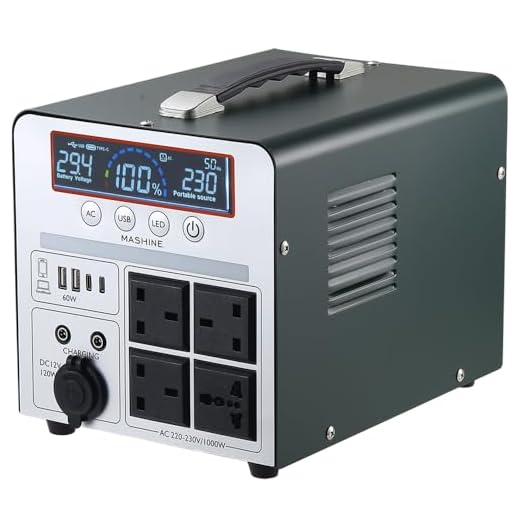
1000W 666Wh Portable Power Station Inverter
Powerful inverter for RVs and home backup
1000W pure sine wave portable power station with 666Wh capacity, four AC outlets and multiple USB ports to run UK appliances, laptops and camping gear safely. Offers multiple charging options and built‑in protections, making it a robust solution for extended off‑grid trips and emergency home use; feature image suggestion: 1200x800px showing unit powering devices.
Don’t run heavy appliances (kettle, fan oven) together — most power stations can’t handle 3kW kettles.
Stagger cycles: run fridge compressor, then charge a phone, then use a low‑power cooker.
Use the power station’s display to track instantaneous watts; set a conservative cap 10–20% below its continuous rating.
Food safety for fridge/freezer
Keep doors shut. Fridge food is generally safer if unopened for around 4 hours; freezers: full ≈ 48 hours, half ≈ 24 hours.
Move high‑risk items (milk, raw meat) to a cooler with ice if unsure.
Label “use first” items if planning staged defrosting.
Safe cooking and ventilation
Use mains gas hob if available (beware electric ignition). Never use indoor camping stoves or barbecue grills.
Outdoors only: camping stoves and gas burners with adequate ventilation.
Low‑power options: slow cooker, thermal cooker, or a 1–2 kW induction hob if your inverter supports it.
Always follow carbon monoxide guidance — generators and fuel stoves must be outside and away from doors/windows.
Smart gadget common sense
Disable remote‑wake and non‑essential cloud features; use local timers and dim screens.
Turn off background devices (smart speakers, cameras) to conserve Wh.
If unsure how long you’re off-grid, conserve power for communications and critical refrigeration.
Next we’ll look at post‑outage checks, cleaning, and troubleshooting to get everything safely back to normal.
6
Post-outage safety, maintenance and troubleshooting
Immediate inspection: what to look for
After power returns, do a quick visual and sniff check before switching devices on. Look for:
external heat damage, scorch marks or melted sockets
bulging or punctured rechargeable cells, swelling in power banks or UPS units
unusual smells (chemical or burning) or hissing sounds
tripped RCDs/MCBs and blown fuses
If you need guidance, search “check smart appliance after power cut UK” for local checklists and advice. A simple anecdote: one household found a bulging smart scale battery after an outage — caught early, it was safely recycled.
Top Capacity
ADDTOP 26800mAh High Capacity Power Bank
Long-life portable charger for multiple devices
26800mAh high‑capacity power bank with 22.5W fast charging, PD USB‑C and an accurate LCD display that keeps your devices powered for days—excellent for UK travellers and commuters. Fast recharge capability and multi‑device outputs make it ideal for extended trips or busy workdays; feature image suggestion: 1200x800px close‑up with smartphone and tablet.
Check app connectivity and that devices reappear online.
Inspect device logs for unexpected reboots or errors; save logs/screenshots.
Verify firmware versions; if an update failed, reapply or roll back per manufacturer instructions.
Re‑authenticate cloud accounts if tokens expired.
Safe mains testing routine
Wait 5–10 minutes after supply returns to reduce surge risk.
Plug suspicious devices into a surge protector or UPS first.
Test non‑critical items (smart bulbs, displays) before fridges/ovens.
Confirm thermostats, timers and safety interlocks behave normally.
Maintenance and battery care
Cycle lithium batteries every 2–3 months; store at ~40–60% charge and in a cool, dry place.
Portable power stations fare best between 10–25°C; avoid lofts or freezing sheds.
Dispose of damaged or spent batteries at UK authorised centres — search “dispose rechargeable battery UK recycling centres”.
Keep serial numbers, purchase receipts and warranty info accessible (photo them to cloud).
Escalation, repairs and insurance
Photograph damage, record times and contact manufacturer support with serials and logs.
For mains-related damage or suspected wiring faults, consult a qualified electrician.
If appliances are damaged, notify your home insurer promptly; keep receipts for repairs or replacements.
With devices inspected, logged and tested, you’re ready to wrap up with a short practical checklist in the Conclusion.
Be power-cut ready: a quick practical summary
Know your device limits, plan and charge suitable battery backups, and follow safety best practises: always follow manufacturer guidance, use certified equipment and have safe cooking alternatives. Test settings, firmware and a simple kitchen power-cut plan periodically so you can safely use smart kitchen gadgets during power cuts UK.
Choose the right power bank, UPS or portable power station, budget energy during outages and keep post-outage checks and maintenance on your checklist. Bookmark this guide, test your plan, and share feature image — Alt: “How to use smart kitchen gadgets during power cuts UK”.